Search results
Search results
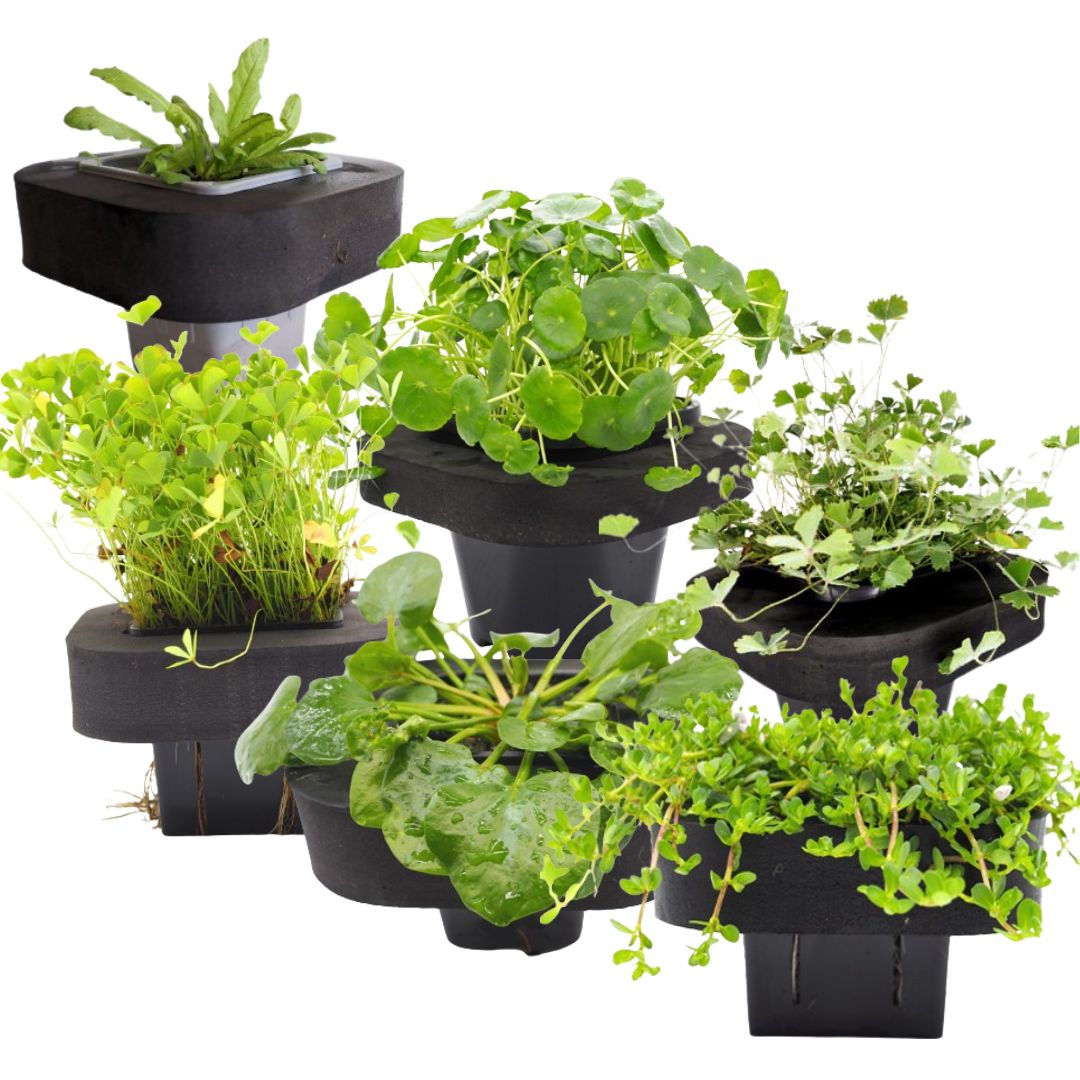
A great combination of 6 native plants
Bring a piece of Australia's unique flora to your pond with our Native Starter Plant Pack. This collection includes six different native aquatic plants, each with its unique beauty and benefits for your pond ecosystem. From the delicate yellow flowers of the Running Marsh Flower to the vibrant green leaves of the Shield Pennywort, these plants will add a touch of natural beauty to your pond while also providing important habitat for native wildlife.
Improve your pond ecosystem's health and attract native frogs and pollinators to your garden.
Features:
- Six different native aquatic plants are included.
- Each plant is grown in NSW, Australia and will provide important habitat for native aquatic wildlife.
- Easy to care for and maintain
- Each plant comes with our unique floating ring, there is no need to submerge the plants as you would do with traditional pond plants.
Swamp Mazus Mazus pumilio
Position - Grows well in any position. Full sun and will tolerate shade.
Flowers - Yes
Submersible - No, prefers shallow water and boggy soil. Performs best when planted into shallow margins of ponds or grown in the pot and floating pond plant ring.
Height - Will reach around 15cm when mature.
Cover – An excellent groundcover pond plant best suited to the margins of a pond
Shield Pennywort Hydrocotyle verticillata
Position - Full sun to part shade
Flowers - No
Submersible - To a depth of 10cm
Foliage - Produced above the water line
Grows - creeping ground cover
Cover – for frogs fish and fry when grown submersed
Brahmi Bacopa Monnieri
Position - Part shade (shade-tolerant) to full sun
Flowers - Small white flowers
Submersible - To a depth of 20cm
Foliage - Can produce foliage both above and below water level
Running Marsh Flower Villarsia reniformis
Position - Part shade (shade-tolerant) to full sun
Flowers - Yellow flowers on stems to 50cm
Submersible - to a depth of 40cm.
Foliage - Shiny bright green lily-type leaves
Hairy Nardoo Marsilea Drummondii
Perennial
Position - Full sun to part shade
Flowers - No
Edible - Yes, node or bulb
Submersible - Yes to a depth of 30cm
Foliage - Produces furry four-leaved foliage that floats on the surface of the water
Origin - Native to Australia
Cover - Great surface cover for fish
Oxygenator - No
Size - 30cm diameter
Nardoo Marsilea Angustifolia
Perennial
Position - Full sun to part shade
Flowers - No
Submersible - Yes to a depth of 30cm
Foliage - Produces foliage that floats on the surface of the water
Origin - Native to Australia
Cover - Great surface cover for fish
Oxygenator - No
Size - 30cm diameter

The Native Starter Pack 2 Contains the following 7cm plants with rings
2 x River Buttercup
1 x Upright milfoil
1 x Hairy nardoo
1 x Swamp goodenia
1 x Brahmi
About the Plants
River Buttercup (Ranunculus Inundatus)
Perenial plant
Position: Full sun to part shade
Flower: yes small yellow flowers
Submersible: To a depth of 2cm. It prefers boggy areas or to float in the pond plant ring
Origin: Australia
Cover: for frogs, fish and polinators
Oxygenator: No
Size: 30cm
Edible: No
A native Australian plant with with yellow flowers that will trail around the margins of your pond. It is well-suited to boggy areas and provides habitat and food for aquatic life.
Upright Milfoil
Perennial
Height: 5cm - 20cm
Width: 15cm -60cm
Position: Part shade (shade-tolerant) to full sun
Flowers: yellow
Submersible: To a depth of 20cm
Foliage: Can Produce foliage above the water line and below the water line
Origin: Australia
Cover: Provides shelter and cover for frogs
Oxygenator: Yes
Propagation: runners & division
Milfoil is a fast-growing pond plant and this makes it ideal for natural algae control. It does this by competing with the algae for nutrients. Less nutrient means less algae and clear water. Further the little fine leaves of Milfoil help to captcha small particles that float in the water further enhancing the clarity of the water in the pond.
Upright Milfoil is an attractive water plant and a good addition to any pond or water garden. Milfoil can be submerged to a depth of 20cm where it will act as an oxygenator and provides cover for fish and tadpoles. It will spread out over the surface of the pond and is used by frogs to spawn on.
Milfoil can be easily propagated and regular pruning will assist in keeping it tidy and neat.
Hairy Nardoo
Perennial
Position: Full sun to part shade
Flowers: No
Edible: Yes, node or bulb
Submersible: Yes to a depth of 30cm
Foliage: Produces furry four-leaved foliage that floats on the surface of the water
Origin: Native to Australia
Cover: Great surface cover for fish
Oxygenator: No
Size: 30cm diameter
Hairy Nardoo Marsilea Drummondii is a classic Australian native water plant. Hairy Nardoo produces a clover-like soft furry leaf that closes at night or on overcast days. Leaves when fully submersed will float on the surface of the water or it will produce a firm upright stem when grown in shallow water. Near the base of the stem, it produces a small edible node.
Swamp Goodenia
Position: Part shade (shade-tolerant) to full sun
Flowers: Yes (Bright Yellow Flowers)
Submersible: To a depth of 10cm
Foliage: Grows like a Mat on the surface
Origin: Native to Australia
Cover: Great mat cover plant when grown with a floating ring
Oxygenator: No
The Swamp Goodenia or Goodenia humilis (humilis; meaning low growing) is a carpeting Australian native plant that thrives in continuously moist or boggy areas. Due to this, it thrives in our floating ring. Swamp Goodenia consists of green soft hairy leaves and in warmer periods of the year, beautiful clusters of bright yellow flowers flourish providing a gorgeous splash of yellow to any pond.
A great pond plant to provide cover and long-term protection for fish, tadpoles and frogs.
Brahmi
Position: Part shade (shade-tolerant) to full sun
Flowers: Small white flowers
Submersible: To a depth of 20cm
Foliage: Can produce foliage both above and below water level
Origin: Native to the wetlands of southern and Eastern India, Australia, Europe, Africa, Asia, and North and South America
Cover: Great cover plant when grown with a floating ring
Oxygenator: Yes (when grown submersed)
Propagation Division
Every pond or water garden should have Brahmi in it as it is plant that has so many uses. Brahmi has small succulent-like green leaves and produces a pale white flower.
It can be grown submersed to a depth of 20cm where it will act as an oxygenator in the pond. It will also mat out over the top of the pond and provide cover and shelter for fish and tadpoles. Aside from its uses for fish and creatures that inhabit ponds and water gardens, it also can be used for its medicinal properties as well.
Brahmi is known as the 'Memory Herb' for its potential cognitive and medicinal benefits! and has been used in India for thousands of years as a remedy for improving memory and assisting with mental health conditions including anxiety. It is also incorporated as part of Chinese medicine, assisting with warming the kidneys and as a brain tonic.
As we age we are more prone diseases such as Alzheimer’s and Parkinson and taking Brahmi may assist with delaying these from occurring. The leaves on their own have a somewhat bitter taste but can be mixed with other aquatic edible plants like water mint with added honey and taken as tea to improve the flavour.
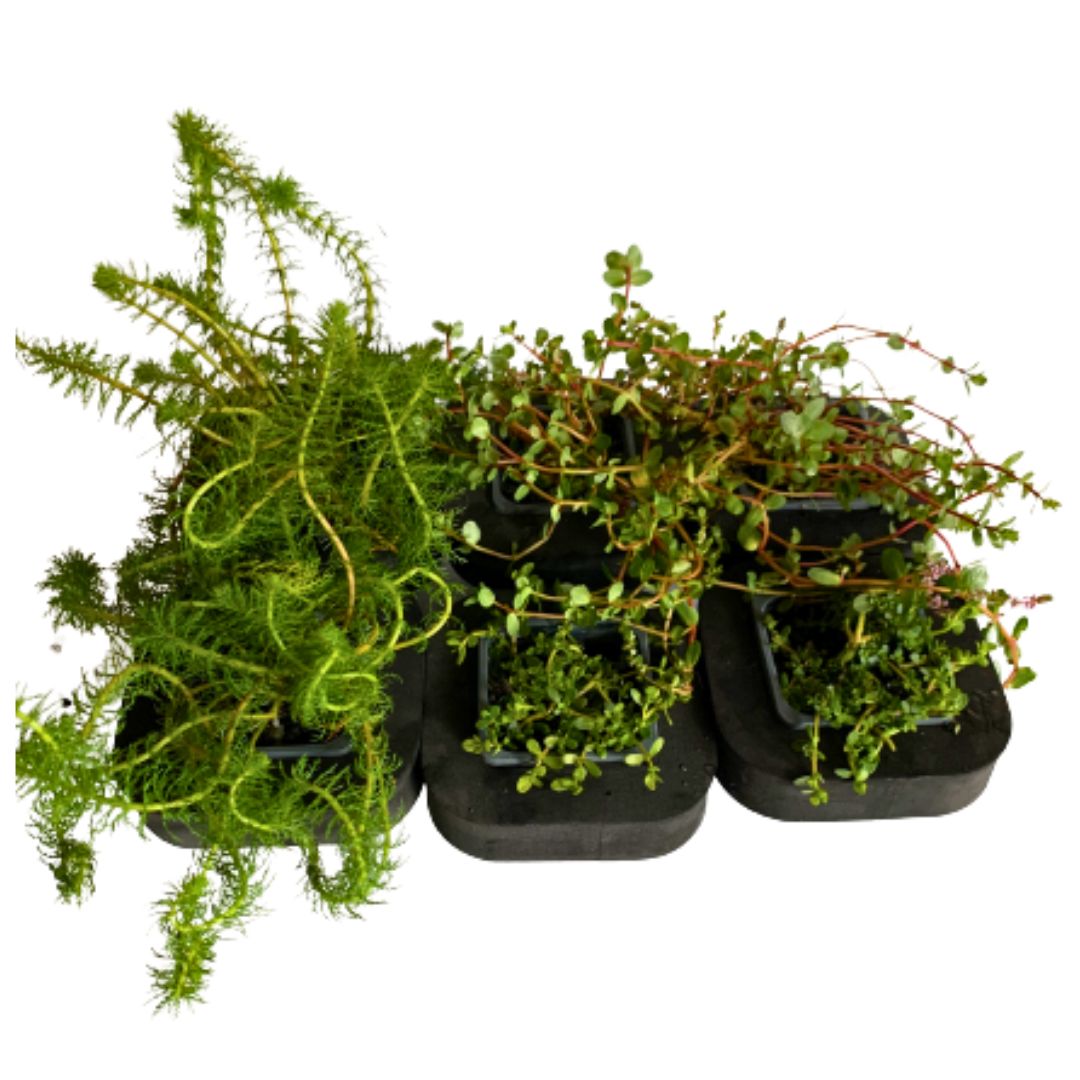
About the Pack
Oxygen is essential for life in a pond. This combination of plants will assist in raising oxygen levels in a pond or water garden and will help reduce algae growth!
The Oxygenator 7cm starter pack consists of
2 x Milfoil
2 x Pink Heather
2 x Brahmi
About the Plants
Brahmi
Position: Part shade (shade-tolerant) to full sun
Flowers: Small white flowers
Submersible: To a depth of 20cm
Foliage: Can produce foliage both above and below water level
Origin: Native to the wetlands of southern and Eastern India, Australia, Europe, Africa, Asia, and North and South America
Cover: Great cover plant when grown with a floating ring
Oxygenator: Yes (when grown submersed)
Propagation Division
Every pond or water garden should have Brahmi in it as it is a plant that has so many uses. Brahmi has small succulent like green leaves and produces a pale white flower.
It can be grown submersed to a depth of 20cm where it will act as an oxygenator in the pond. It will also mat out over the top of the pond and provide cover and shelter for fish and tadpoles. Aside from its uses for fish and creatures that inhabit ponds and water gardens, it also can be used for its medicinal properties as well.
Brahmi is known as the 'Memory Herb' for its potential cognitive and medicinal benefits! and has been used in India for thousands of years as a remedy for improving memory and assisting with mental health conditions including anxiety. It is also incorporated as part of Chinese medicine, assisting with warming the kidneys and as a brain tonic.
As we age we are more prone to diseases such as Alzheimer’s and Parkinson and taking Brahmi may assist with delaying these from occurring. The leaves on their own have a somewhat bitter taste but can be mixed with other aquatic edible plants like water mint with added honey and taken as tea to improve the flavour.
Upright Water Milfoil
Perennial
Height: 5cm - 20cm
Width: 15cm -60cm
Position: Part shade (shade-tolerant) to full sun
Flowers: yellow
Submersible: To a depth of 20cm
Foliage: Can Produce foliage above the water line and below the water line
Origin: Australia
Cover: Provides shelter and cover for frogs
Oxygenator: Yes
Propagation: runners & division
Milfoil is a fast-growing pond plant and this makes it ideal for natural algae control. It does this by competing with the algae for nutrient. Less nutrient means less algae and clear water. Further the little fine leaves of Milfoil help to captcha small particles that float in the water further enhancing the clarity of the water in the pond.
Upright Milfoil is an attractive water plant and a good addition to any pond or water garden. Milfoil can be submerged to a depth of 20cm where it will act as an oxygenator and provides cover for fish and tadpoles. It will spread out over the surface of the pond and is used by frogs to spawn on.
Milfoil can be easily propagated and regular pruning will assist in keeping it neat.
Pink Heather
Perennial
Position: Full sun - part shade
Flowers - Small pink flowers
Submersible - To a depth of 5cm - 60cm
Foliage - Produced above and below the water
Origin - South East Asia
Grows - to 5cm (width) and up to 20cm (high)
Cover - Excellent cover for fish in floating ring
Oxygenator – yes
Edible – No
Pink Heather Rotala roundifolia is a great and versatile pond plant. It can be grown to a depth of 60cm so it’s an ideal oxygenator for deeper ponds. Rotala rotundifolia can also be grown in water as shallow as 5cm where the stems take on a rigid upright form. In warmer months Pink Heather produces an abundance of small pink flowers that will even attract bees around the water garden.
It provides cover for both tadpoles and fish when grown submersed or out of the water and will mat out over the surface creating a stunning flower display when grown in the floating ring that is included with all our plants. As a fast-growing plant, it is also useful in controlling algae as it competes for the nutrient in pond water which slows or even stops algae growth creating a clean and clear water garden.
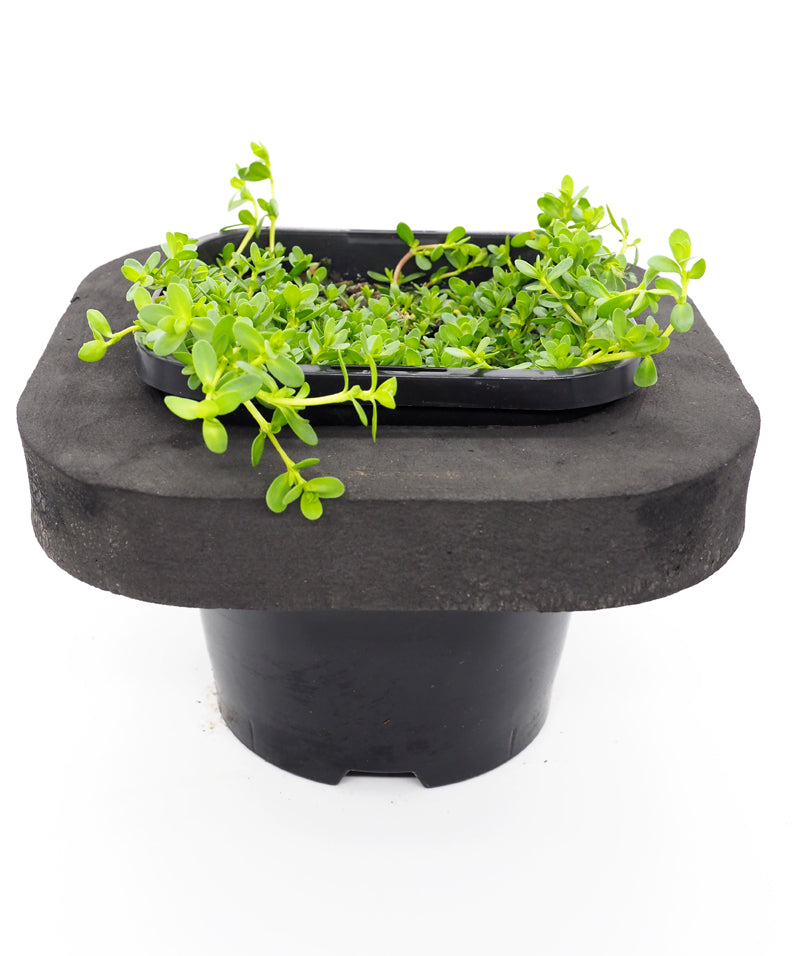
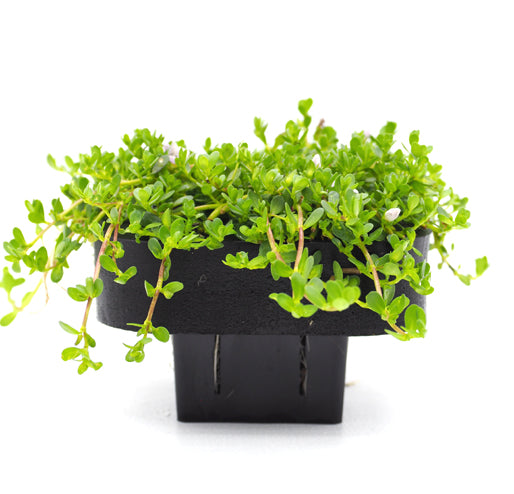
Brahmi (Bacopa monnieri) is an Australian native aquatic plant that is easy to grow and wonderfully versatile in the pond. Also known as the Memory Herb, Brahmi produces small white flowers and spreading foliage that can grow both above and below the water.
Grown in a floating pond ring, Brahmi can spread across the surface of your pond to create valuable cover and shelter for fish, tadpoles and other pond life. When grown submerged, it also acts as an oxygenating pond plant, making it a useful addition to a healthy, balanced water garden.
Why you'll love Brahmi
- Australian native aquatic plant
- Tolerates part shade through to full sun
- Produces delicate small white flowers
- Can grow both above and below the water
- Excellent spreading plant for creating pond cover
- Provides shelter and habitat for fish and tadpoles
- Acts as an oxygenator when grown submerged
- Can be grown in water up to approximately 20cm deep
- Ideal for ponds, water bowls and container water gardens
Where to grow Brahmi
Brahmi is a flexible pond plant that can be grown in part shade through to full sun. It can be planted in shallow water up to approximately 20cm deep, where its foliage can grow both underwater and above the water surface.
For the best spreading effect, grow Brahmi in one of our floating pond rings. As it grows, it can spread and form a natural mat across the surface of the pond, providing shade, cover and shelter for pond inhabitants.
Brahmi as an oxygenating pond plant
When Brahmi is grown submerged, it can contribute to oxygenation within the pond. Its ability to grow both underwater and above the surface makes it a particularly versatile choice when you're looking to combine pond habitat, surface cover and water-plant benefits in one plant.
Brahmi and the traditional 'Memory Herb'
Brahmi has a long history of use as a traditional herb and is commonly known as the Memory Herb. It has traditionally been used in herbal practices and is also enjoyed as a fresh or dried herb.
If you'd like to learn more, read our guide to the traditional uses and health benefits of Brahmi.
You can also explore our guide to pond plants used in traditional medicine and as herbal remedies.
Brahmi Plant Information
Plant type: Aquatic pond plant
Botanical name: Bacopa monnieri
Origin: Australia
Position: Part shade to full sun
Flowers: Small white flowers
Water depth: Up to approximately 20cm
Foliage: Can grow above and below water
Oxygenating: Yes, when grown submerged
Growth habit: Spreading
Best for: Pond cover, fish and tadpole habitat, shallow water and container water gardens
Grown in a floating pond ring
Our pond plants are supplied ready to make adding plants to your water garden easy. Simply place the Brahmi in its floating pond ring and position it in your pond or water bowl.
As the plant grows and spreads, it can create a beautiful natural cover across the water surface while providing valuable habitat for pond life.
Looking for more pond plants? Explore our full range of Water Plants to find the right combination of flowering, floating, oxygenating and habitat plants for your pond.
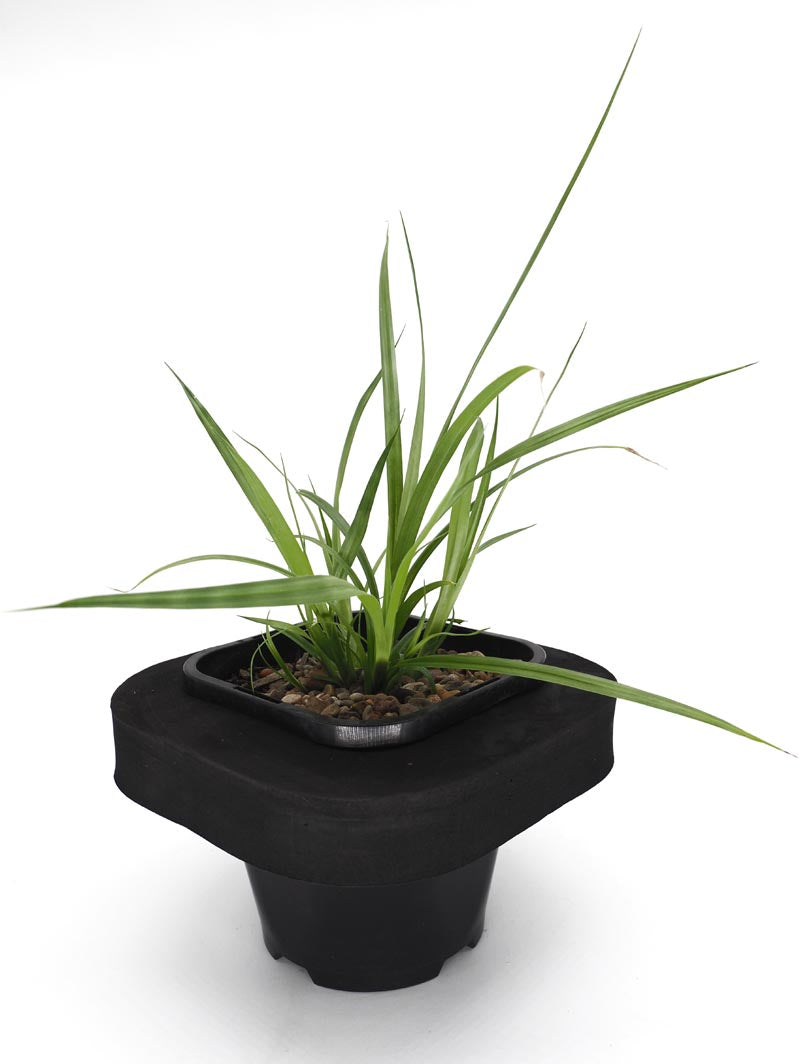
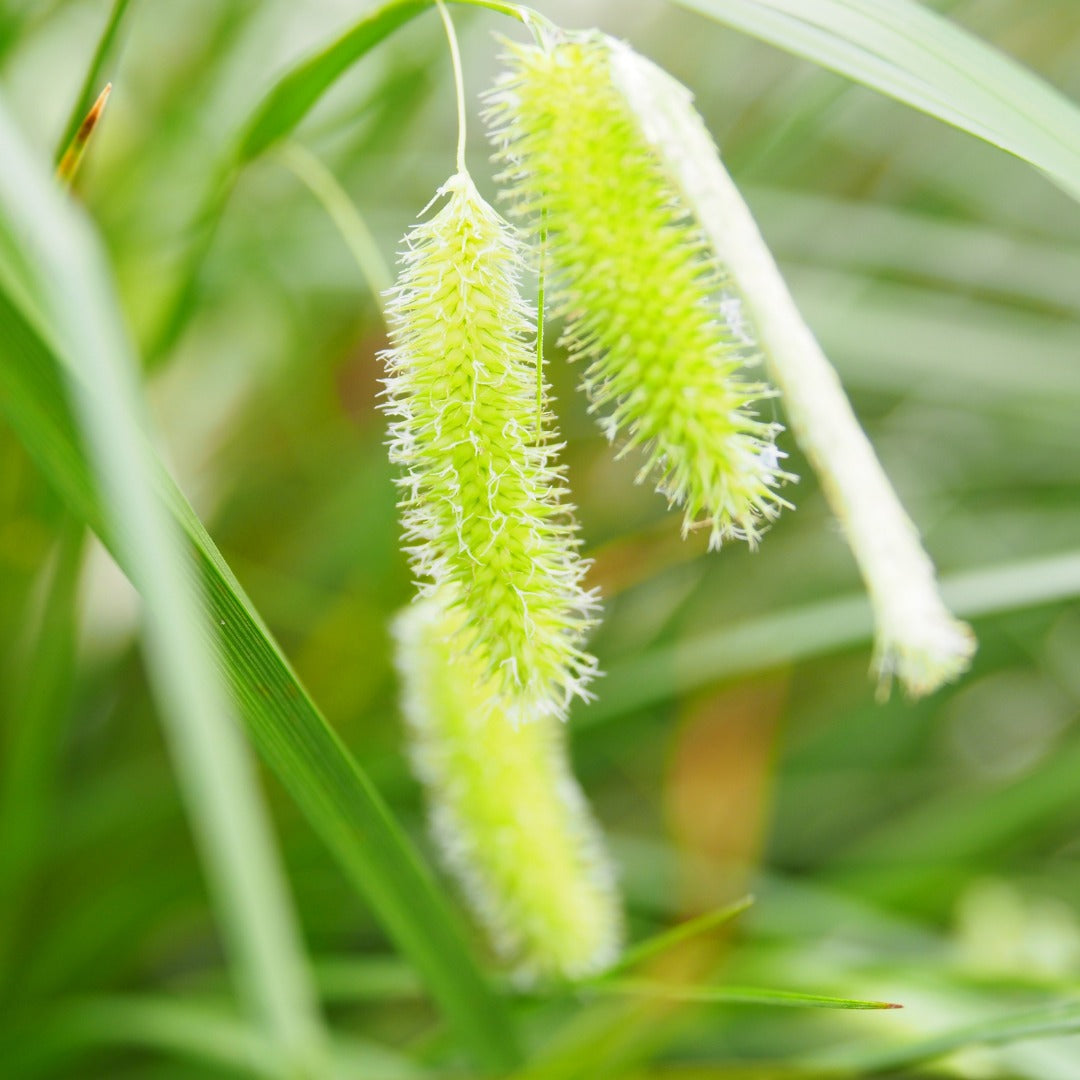
Frog Grass (Carex fascicularis) is a tough and versatile Australian native pond plant that brings height, structure and valuable wildlife habitat to ponds and water gardens. Also known as Tassel Sedge, this attractive native sedge grows to approximately 60–70cm high and is well suited to the marginal areas around your pond.
Frog Grass is particularly useful for creating a frog-friendly water garden. Its arching foliage provides shelter and habitat, while the plant's spring flowers produce distinctive soft catkins that elegantly drape among the leaves.
It is an excellent choice for planting in groups, creating a natural clump of foliage around the edge of your pond.
Why you'll love Frog Grass
- Australian native pond plant
- Also known as Tassel Sedge
- Excellent plant for frog habitat
- Provides height and structure around the pond
- Grows approximately 60–70cm high
- Suitable for full sun through to shade
- Ideal for marginal pond areas
- Attractive arching foliage
- Produces soft, hanging catkins in spring
- Provides habitat for frogs and other garden wildlife
- Can provide food and habitat for butterflies and other beneficial insects
- Cold tolerant
- May die back in colder areas during winter before re-emerging in spring
- Can be submerged 20-60cm
Where to grow Frog Grass
Frog Grass is particularly well suited to the margins of ponds and water gardens, where the soil remains moist but the plant does not need to be permanently submerged.
One of its great advantages is its adaptability to light conditions. It can grow happily in full sun through to shade, making it a useful choice for areas where many flowering pond plants may struggle.
Plant several together to create a natural clump and increase the amount of shelter and habitat available around the pond.
Frog Grass for wildlife
If you're designing a pond to encourage frogs and native wildlife, Frog Grass is an excellent plant to include.
Its dense, arching foliage provides shelter and cover around the pond margin, creating a more natural habitat for frogs. The plant can also contribute to a wildlife-friendly garden by providing habitat and food resources for butterflies and other beneficial insects.
For the best wildlife habitat, combine Frog Grass with a variety of floating, flowering, marginal and low-growing pond plants.
Spring catkins
In spring, Frog Grass produces distinctive soft catkins that hang elegantly from the arching foliage.
These delicate flower structures add texture and movement to the plant and provide an attractive seasonal feature before the warmer months bring renewed growth.
Frog Grass through winter
Carex fascicularis is cold tolerant, although it can die back during winter in some parts of Australia. This is not necessarily a sign that the plant has been lost.
In suitable conditions, it can re-emerge as temperatures rise in spring and produce fresh new growth.
Frog Grass Plant Information
Plant type: Perennial Australian native sedge
Botanical name: Carex fascicularis
Common names: Frog Grass, Tassel Sedge
Origin: Australia
Position: Full sun to shade
Height: Approximately 60–70cm
Flowers: Soft hanging catkins in spring
Growth habit: Clumping with arching foliage
Best for: Pond margins, frog habitat, wildlife gardens, adding height and structure
Plant Frog Grass around your pond
Frog Grass is an excellent choice when you want to create a pond that feels natural, established and welcoming to wildlife.
Plant it around the damp margins of your pond and combine it with other Australian native pond plants to create different layers of height, cover and habitat.
Looking for more Australian native pond plants? Explore our range of Pond Plants Online and discover native plants selected for Australian water gardens and wildlife-friendly ponds.
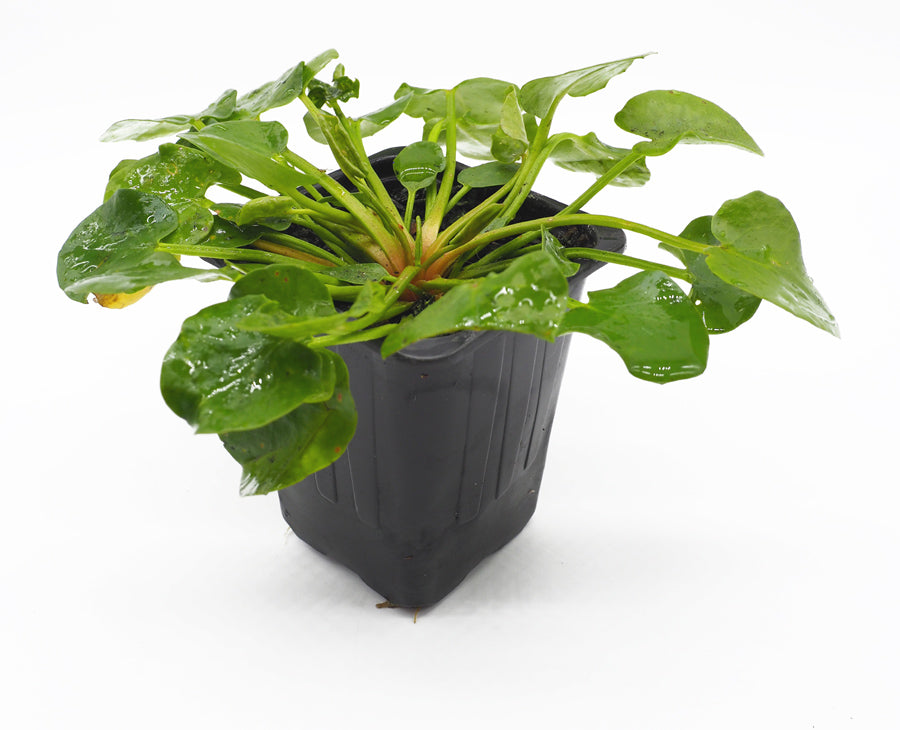
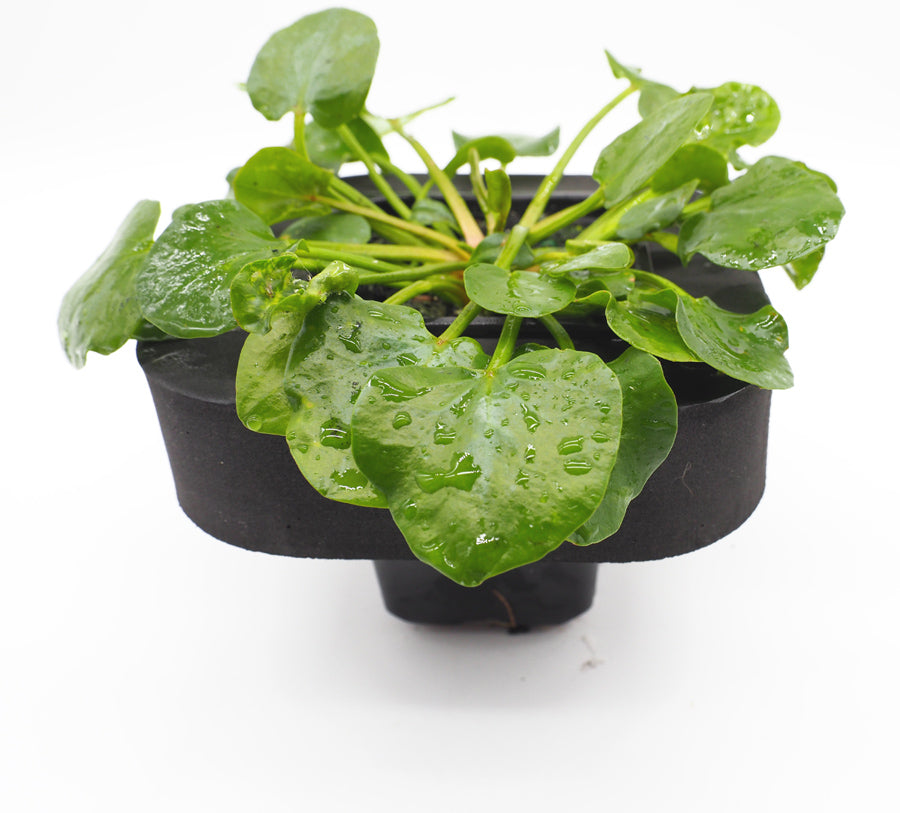
Running Marsh Flower (Villarsia reniformis), also known as Golden Marsh, is a beautiful Australian native pond plant with glossy green, lily-like leaves and cheerful yellow flowers. Its foliage gives it the appearance of a miniature water lily, making it an excellent choice when you want the look of a water lily without needing a large pond.
A versatile plant for both small and large water gardens, Running Marsh Flower can be planted in shallow water up to approximately 5cm deep, grown in a floating pond ring or planted around the boggy and marginal areas of your pond.
When grown in a floating ring, it can spread across the water surface to provide valuable cover and shelter for fish and tadpoles.
Why you'll love Running Marsh Flower
- Beautiful Australian native pond plant
- Also known as Golden Marsh
- Glossy, bright green lily-type leaves
- Produces attractive yellow flowers
- Flowers from approximately October to March
- Flower stems can reach approximately 50cm
- Suitable for part shade to full sun
- Can be grown in shallow water up to approximately 5cm deep
- Excellent plant for boggy and marginal pond areas
- Can be grown in a floating pond ring
- Provides cover and shelter for fish and tadpoles
- Suitable for both small and large water gardens
Where to grow Running Marsh Flower
Running Marsh Flower is a versatile plant that can be used in several areas of the water garden. It grows well in part shade through to full sun and can tolerate shallow water up to approximately 5cm deep.
It is particularly well suited to boggy areas and pond margins, where the soil remains consistently moist.
Alternatively, place it in one of our floating pond rings and allow the foliage to spread across the surface of the pond. This creates an attractive natural display while providing cover for fish and tadpoles.
Running Marsh Flower – a native alternative to a water lily
With its shiny bright green, lily-type leaves, Running Marsh Flower has the appearance of a small water lily, making it a great choice for smaller ponds, water bowls and container water gardens where a traditional water lily may be too large.
Its yellow flowers rise above the foliage on stems that can reach approximately 50cm, adding height and seasonal colour to the water garden.
Yellow flowers from spring through summer
Running Marsh Flower produces its distinctive yellow flowers from approximately October through to March, providing a long flowering period through the warmer months.
The combination of glossy green foliage and bright yellow flowers makes it an attractive feature plant for the edge or surface of your pond.
Running Marsh Flower for fish and tadpoles
When grown in a floating pond ring, Running Marsh Flower can spread across the water surface, creating natural cover and shelter for fish and tadpoles.
For a wildlife-friendly pond, combine it with a selection of plants that provide cover at different levels, including floating, submerged and marginal pond plants.
Running Marsh Flower Plant Information
Plant type: Perennial aquatic pond plant
Botanical name: Villarsia reniformis
Common names: Running Marsh Flower, Golden Marsh
Origin: Australia
Position: Part shade to full sun
Flowers: Yellow
Flowering period: Approximately October to March
Flower stems: Up to approximately 50cm
Water depth: Up to approximately 5cm
Foliage: Shiny, bright green lily-type leaves
Oxygenating: No
Edible: No
Best for: Pond margins, boggy areas, shallow water, floating rings and fish and tadpole cover
Grow Running Marsh Flower in a floating pond ring
Our floating pond rings make it easy to add Running Marsh Flower to your pond without complicated planting.
Simply place the plant into the floating ring and position it on the water surface. As it establishes, the foliage can spread outwards to create a natural green cover across the pond.
Looking for more Australian native pond plants? Explore our range of Pond Plants Online and discover native, flowering, floating, oxygenating and habitat plants for your water garden.
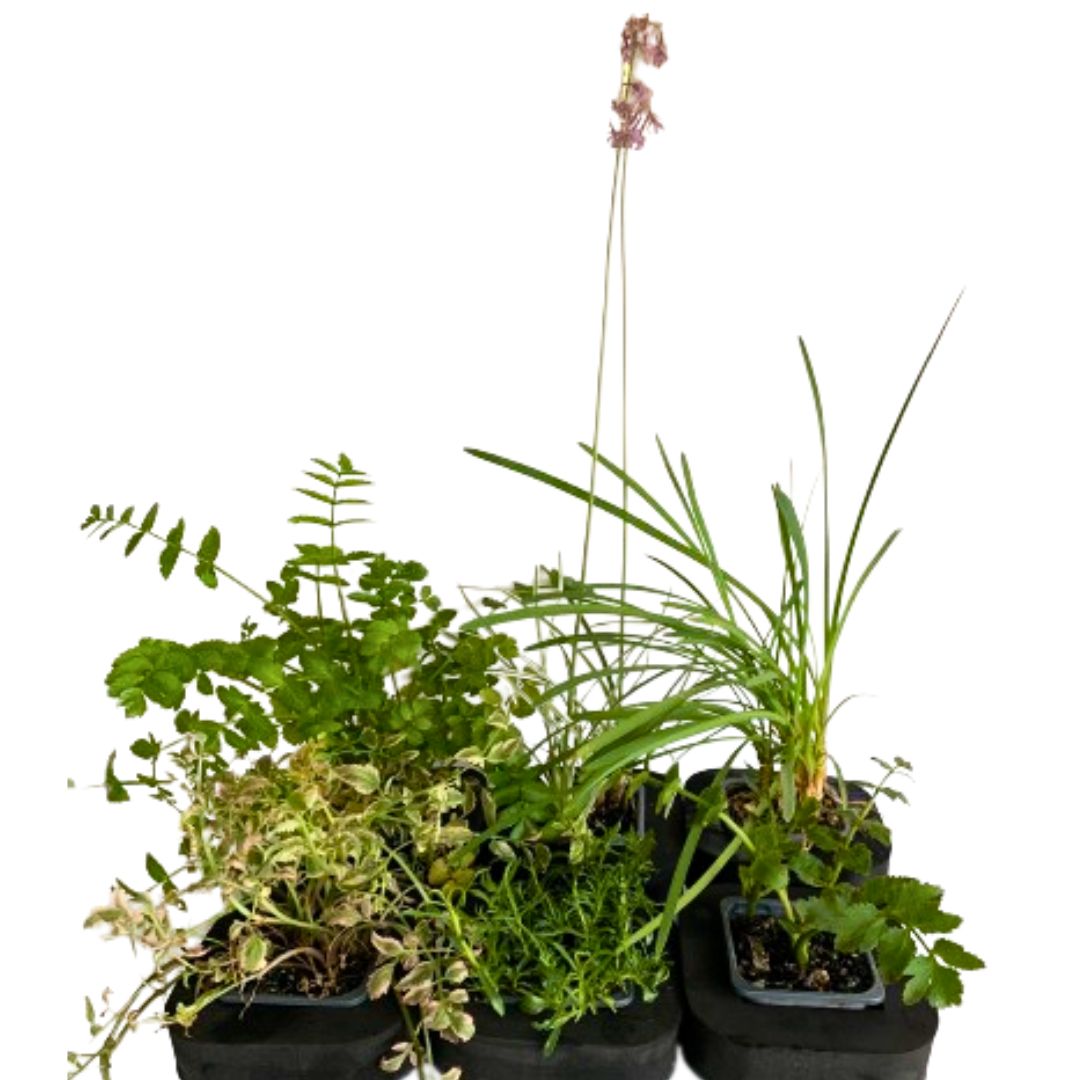
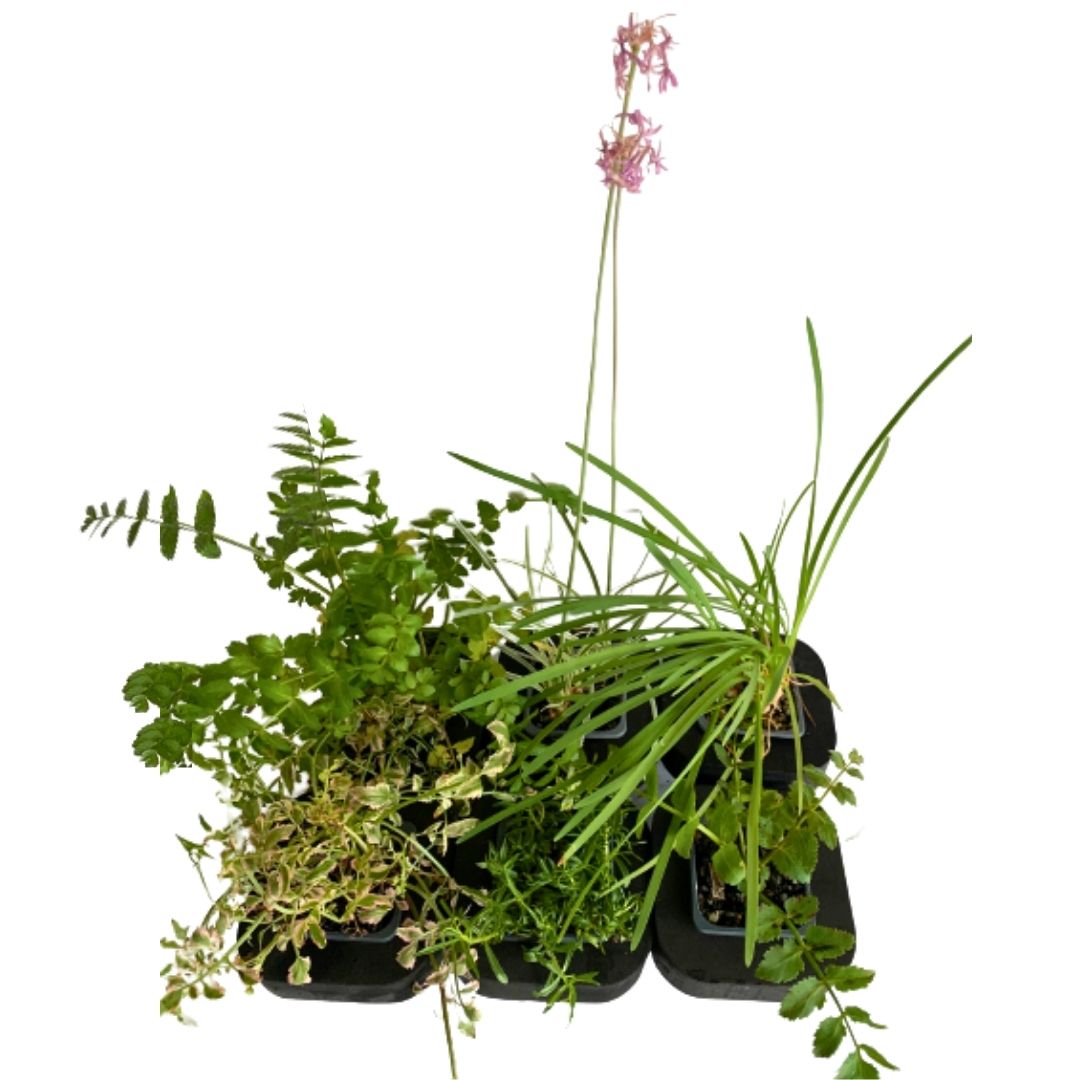
- 1 x Water celery
- 1 x Lebanese cress
- 1 x Fine-leaf water mint
- 1 x Rainbow parsley
- 1 x Water garlic
- 1 x Variegated water garlic
About these pond plants.
Water Celery
Perennial
Position- Full sun - part shade
Flowers - Small creamy white flowers
Submersible - To a depth of 2cm - 5cm
Foliage - Produced above the water
Origin - Australia
Grows - to 20cm W and up to 40cm H
Cover - No
Oxygenator - No
Edible - Yes
propagation:-Division
Water Celery (Berela erecta) is an excellent addition to any edible water garden. Both the leaves and stems can be eaten. It has a very strong celery flavour so it's a good addition to any green summer salad.
Lebanese Cress
Perennial
Position - Full sun to part shade
Flowers - Yes
Submersible -To a depth of 5cm-15cm
Foliage - Produced above water
Origin - Mediterranean
Grows - to 40cm W and 20cm H
Cover - Great Surface cover when grown with a floating ring
Oxygenator - No
Edible - Yes
Lebanese Cress Aethionema Cordifolium also known as Lebanese water cress can reduce algae growth in ponds due to rapid growth and surface cover. The leaves from this edible fern-like water plant make a tasty garnish in any salad.
Lebanese cress has many health benefits. The leaves of this pond plant are a good source of protein with vitamins A, B, C, iron, calcium, phosphorous and potassium.
Fine Leaf Water Mint
Perennial plant
Position - Part shade
Flowers - small white flower
Submersible - To a depth of 5cm
Foliage - Produced above water
Origin - Western Mediterranean
Grows - to 20cm W and 30cm H
Cover - Best suited to a floating ring
Oxygenator - No
Edible - Yes
propagation- Division or runners
Fine leaf water mint Mentha cevina has many health benefits. It can be effective in relieving digestive problems such as upset stomach, bad breath (can be used as a mouthwash) and indigestion.
The leaves can be added to drinks, tea and salads to add a wonderful summer flavour. They have a strong punchy flavour and go well in Asian salads.
Like all mints, fine leaf water mint is a good source of vitamin C when served fresh. It also contains vitamin A.
Rainbow Parsley
Perennial
Position - Full sun to part shade
Flowers - small white flowers
Submersible - To a depth of 5cm-15cm
Foliage - Produced above water
Origin - South East Asia
Grows - to 30cm W and 60cm H
Cover - Great Surface cover when grown with our pond plant floating ring
Oxygenator - No
Edible - Yes
Propagation- Division
A variegated variety of water parsley. The cooler the climate the stronger the pink hue in the foliage. Rainbow water parsley adds great flavour and colour when added to salads! This pond plant rich in many vitamins, particularly vitamin K, which is needed for blood clotting and bone health. It's a great source of vitamins A and C (supports immune health).
Parsley is particularly rich in flavonoid antioxidants and vitamin C, which reduce oxidative stress in your body and may lower your risk of certain cancers.
Varigated Water Garlic
Perennial
Oxygenator: No
Edible: Yes
Flower: Yes (small mauve)
Height: 30cm
Water Depth: 1cm
Position: Full sun
Propagation: Division
Variegated Water Garlic Tulbaghia violacea is a native of South Africa. Variegated Water Garlic can reach 30cm in size and has variegated green foliage where the leaf colour at a distance appears white and it produces a small purple flower and is a recent addition to the world of pond plants. It enjoys a full sun position and will perform best when grown in shallow water that does not cover the crown of the plant and can be grown in the floating pond ring that is included with all our plants.
Thinning out Water garlic every season will encourage more flowers and encourage vigorous growth through the summer months.
The leaves of Variegated Water Garlic can be chopped and used in salads and soups. The flowers can be added to vinegar or oils to give a slight hint of garlic flavour. You could also choose to use the flowers as an edible as a garnish.
Perennial
Oxygenator: No
Edible: Yes
Flower: Yes (small mauve)
Height: 30cm
Water Depth: 1cm
Position: Full sun
Propagation: Division
Like the varigated variety, Water Garlic is a fairly recent addition to the world of pond plants. It two is a native of South Africa, Water Garlic can reach 30cm in size and has a light green to grey strappy foliage, and produces a small purple flower.
It is at its best in a sunny position and likes shallow water that does not cover the crown of the plant This is why it is ideally suited to our floating pond ring that is included with all of our plants.
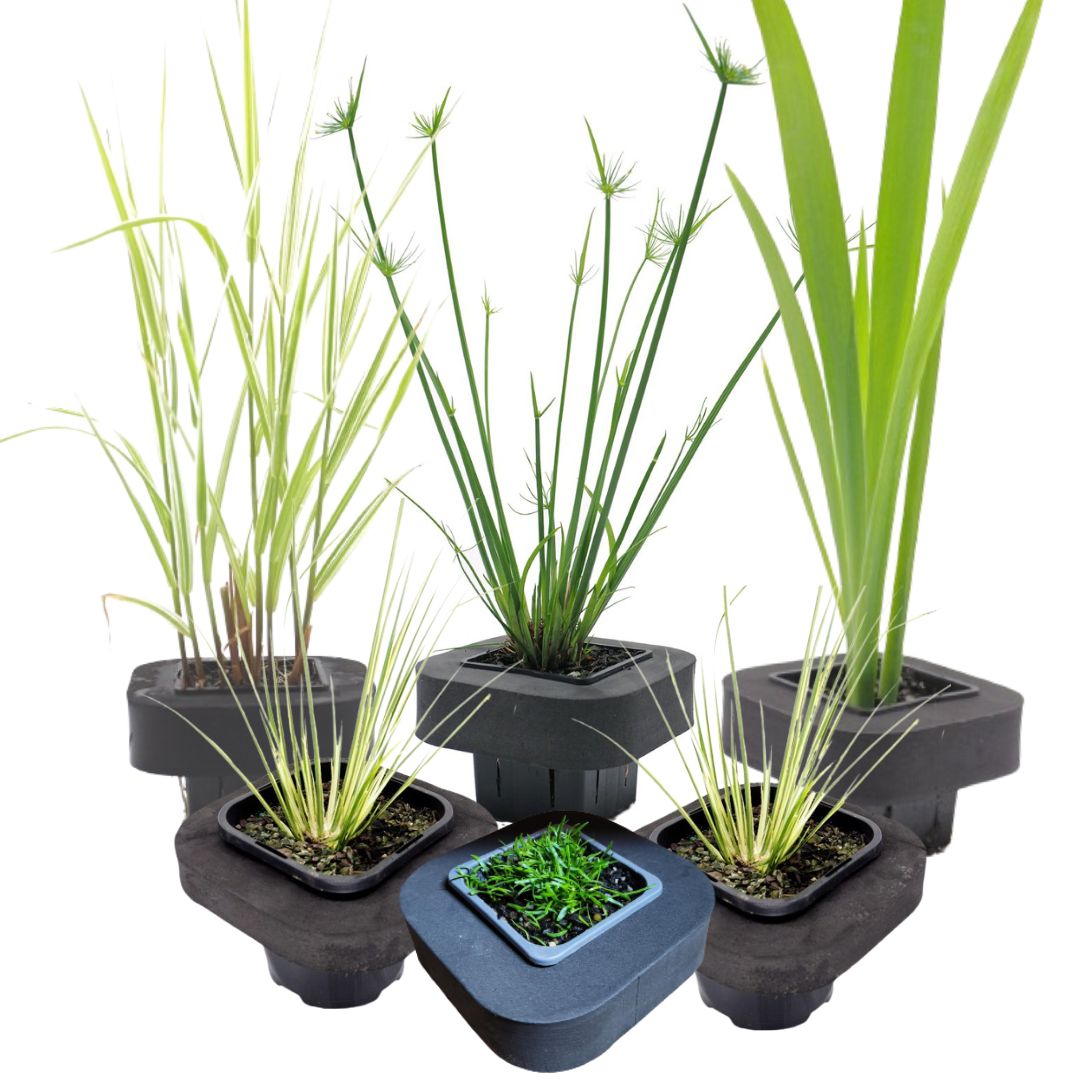
The Frog Attracting Pond starter pack is an ideal group of plants to encourage frogs to come to your pond. They are tall, provide cover, and encourage beneficial insects to the pond that frogs will greedily feed on. The smaller pond plants offer support to emerging tadpoles while providing a habitat for spawning to occur.
The Frog Attracting Starter Kit includes:
1 x Dwarf papyrus
1 x Gardeners Garters
1 x Water Iris
1 x Water Grass
2 x Variegated Sweet Flag (Acorus calamus variegated)
Dwarf Papyrus
Perennial
Position: Part shade (shade-tolerant) to full sun
Flowers: Green Seed spike
Submersible: To a depth of 5cm
Height: To 60cm
Foliage: Produces foliage above the water line
Origin: Africa
Cover: Provides shelter and cover for frogs
Oxygenator: No
Dwarf Papyrus (Cyperus papyrus nana) is one of the classic pond plants. It is a perennial plant that grows best in sunny damp conditions but will tolerate water to a depth of 5cm over the base of the plant. Dwarf Papyrus can grow to 60cm high and forms clumps that slowly increase in volume via rhizomes that spread along boggy areas of the pond or in a pot. Its tight-clumping nature makes it ideal as a plant for attracting frogs to your pond. It is always best to plant Dwarf Papyrus in a pot as they are difficult to remove once established in a pond. They produce a star shaped seed head and can be grown from seed as well as via division.
Gardeners Garters
Perennial plant
Position - Part shade
Flowers - small seed spike
Submersible - To a depth of 5cm (remove tall foliage when using with a ring)Foliage -
Produced above water
Origin - Northern Africa (including Egypt and Nigeria)
Grows - to 60cm (width) and 100cm (high)
Cover - Excellent cover for frogs
Oxygenator - No
Edible - No
Gardeners Garters Phalaris arundinacea is a tall spreading grass with green-and-white-striped foliage and it also forms a narrow pale green flower. Its tall clumping nature encourages insects making it an excellent plant for attracting frogs to your pond. It’s a real all-rounder in water gardens as it will tolerate full sun through to dappled shade. It looks its best when grown on mass and due to its quick-growing nature, it can be divided up into multiple plants throughout the warmer months.
The variegated leaf makes for an excellent contrast plant in any pond.
Water Iris
Perennial plant
Size: 30cm to 1 mtr tall
Position: Full sun to part shade but flowers best in full sun
Flowers: Yes Light purple in colour
Submersible: Yes to a depth of 10cm
Foliage: Produces Foliage above the water
Origin: Native to the US
Cover: Great habitat for frogs
Oxygenator: No
In a water garden, Iris provides height and definition and although they only flower once a year, it’s well worth the wait. Frogs love Water Iris in a water garden, as they provide shelter from predators in the pond. They can easily be propagated via division and depending on the size of the pot will need dividing on a yearly basis.
Water Grass
Position: Part shade (shade-tolerant) to full sun
Flowers: No
Submersible: To a depth of 10cm
Foliage: Grows like a Mat on the surface
Origin: Native to Australia
Cover: Great mat cover plant when grown with a floating ring
Oxygenator: No
A fantastic Australian Native plant the Water Grass or Lilaeopsis brisbanica is a low growing (mat forming) water plant. Wonderful for bringing lush green grass looking leaves to any pond. Able to live in water to a depth of 10cm deep, Lilaeopsis brisbanica (Water Grass) is perfect for shallow ponds and ponds that receive full sun to part shade throughout the day.
This plant provides shelter and food for small fish, frogs, and other aquatic creatures, attracting a diverse range of wildlife to your pond. It is a key plant in frog ponds as it provides habitat and shelter for tadpoles and during spawning times.
If you are looking for a beautiful green native plant to bring a nice hue of colour to your pond then the Lilaeopsis brisbanica (Water Grass) is a must!
Learn more here: The Beauty of Brisbane Water Grass: A Low-Maintenance Australian Native for Your Pond
Variegated Sweet Flag (Acorus calamus variegated)
Origin: East Asia
Type: Perennial
Position: Full sun - part shade
Height: up to 30cm
Width: up to 30cm
Depth in the pond: Prefers shallow water to 5cm
This variegated form of sweet flag is a stunning choice for pond margins or to grow and float anywhere in the unique pond plant floating ring. It is also an excellent pond plant for frog habitat as it is cold hardy and tolerant of regions in Australia that experience harsh winters. In the cooler months, our frog populations need habitat to provide support against frog chytrid fungus, which has higher mortality in winter.
It grows well as a bog plant filtering impurities from pond water.


Nardoo (Marsilea angustifolia) is a classic Australian native water plant and a wonderful choice for a native water garden. Its distinctive green, four-leaf clover-shaped foliage creates an attractive natural display and can either float across the surface of the pond or grow upright when planted in wet or boggy soil.
This versatile perennial plant can grow in full sun to part shade, making it an excellent all-rounder for ponds, water bowls and bog gardens. When grown submerged, its leaves rise to the surface of the water, creating natural cover and shelter for fish.
When grown around the edge of the pond in wet or boggy soil, the foliage stands upright, giving Nardoo a completely different appearance.
Why you'll love Nardoo
- Australian native water plant
- Distinctive four-leaf clover-shaped foliage
- Excellent plant for a native water garden
- Can grow floating on the pond surface
- Can also grow upright in wet or boggy soil
- Suitable for full sun to part shade
- Can tolerate water depths of up to approximately 30cm
- Provides excellent surface cover for fish
- Suitable for pond margins and bog gardens
- Grows to approximately 30cm diameter
- An interesting plant with traditional uses
Where to grow Nardoo
Nardoo is a versatile plant that can be grown in several areas of the water garden.
When planted in water up to approximately 30cm deep, its four-leaf foliage can float across the surface, creating attractive natural cover.
Alternatively, plant Nardoo around the edge of your pond in wet or boggy soil, where the leaves can grow upright.
It is tolerant of both full sun and part shade, making it a particularly adaptable native pond plant.
Nardoo's distinctive four-leaf foliage
The most recognisable feature of Nardoo is its unusual four-leaf clover appearance.
When submerged, the foliage rises to the surface and spreads across the water. In wet soil around the pond margin, the leaves can stand upright, giving you two quite different looks from the same plant.
This makes Nardoo an excellent choice for adding natural texture and interest to an Australian native water garden.
Nardoo for fish and wildlife
When grown submerged, Nardoo creates surface cover for fish, giving them sheltered areas within the pond.
Surface-covering plants can also help create a more natural pond environment when combined with marginal, flowering and other aquatic plants.
For a wildlife-friendly water garden, plant Nardoo alongside other Australian natives to create different levels of vegetation and habitat.
Traditional uses of Nardoo
Nardoo has a long history of traditional use by Aboriginal Australians. The plant produces sporocarps, small seed-like structures containing spores, which have traditionally been processed and used as food.
Traditional preparation is important when consuming Nardoo, and it should not be eaten without appropriate preparation.
Nardoo Plant Information
Plant type: Perennial native water plant
Botanical name: Marsilea angustifolia
Common name: Nardoo
Origin: Australia
Position: Full sun to part shade
Flowers: No
Water depth: Up to approximately 30cm
Foliage: Four-leaf clover-like foliage that can float on the water surface
Growth: Approximately 30cm diameter
Oxygenating: No
Best for: Native water gardens, pond surface cover, fish habitat, shallow water, pond margins and bog gardens
Grow Nardoo in your water garden
Nardoo is a great choice if you're creating an Australian native water garden or simply want an unusual pond plant with distinctive foliage.
Grow it submerged to create floating surface cover, or plant it into the damp margins of your pond where its leaves can stand upright.
Looking for more Australian native pond plants? Explore our range of Pond Plants Online and discover native, flowering, floating, oxygenating and habitat plants for your water garden.
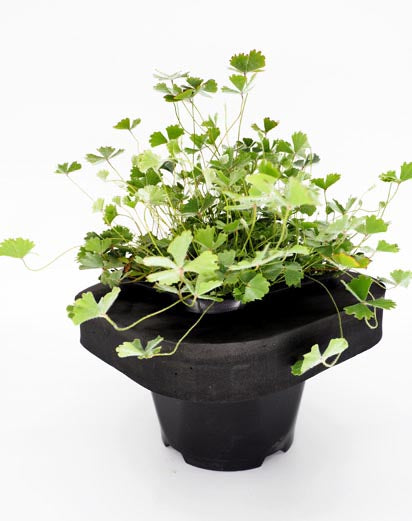
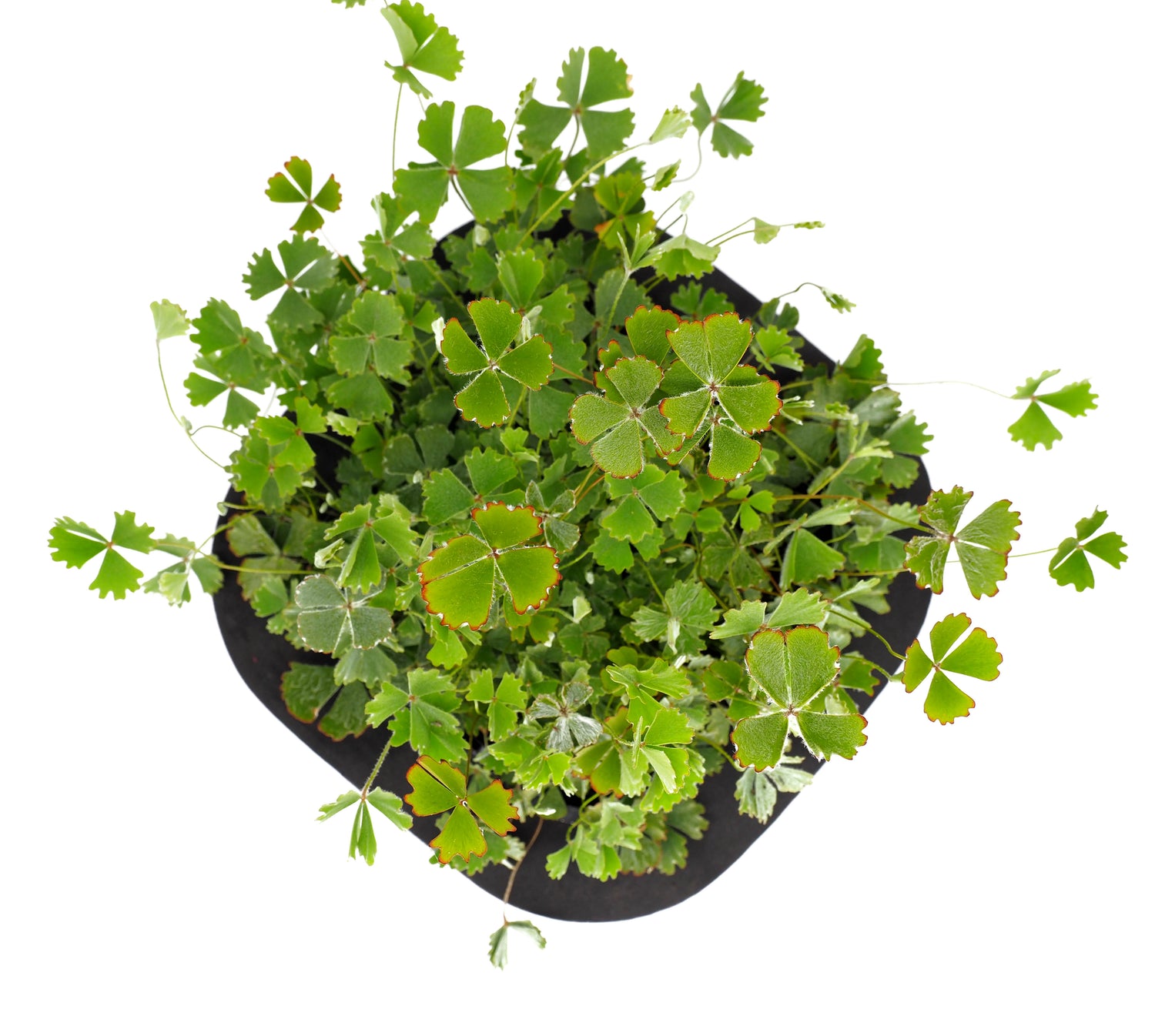
Hairy Nardoo (Marsilea drummondii) is a fascinating Australian native water plant with distinctive four-leaf clover-like foliage covered in fine, soft hairs. Also known as Nardoo, this unusual aquatic plant is a wonderful choice for adding native character and natural surface cover to your pond.
When grown fully submerged, Hairy Nardoo produces floating leaves that spread across the surface of the water. In shallower water, it can produce firmer upright stems, giving the plant a completely different appearance.
The four-leaf foliage has another interesting characteristic — it can close at night and during overcast weather, then open again when conditions brighten.
Why you'll love Hairy Nardoo
- Australian native water plant
- Distinctive four-leaf, clover-like foliage
- Soft, furry texture
- Foliage can float across the surface of the pond
- Can also grow upright in shallow water
- Suitable for water depths of up to approximately 30cm
- Provides excellent surface cover for fish
- Suitable for full sun to part shade
- Perennial plant
- Can grow to approximately 30cm diameter
- Edible node produced near the base of the stem
- A fascinating native plant for wildlife-friendly water gardens
Where to grow Hairy Nardoo
Hairy Nardoo is a versatile water plant that can be grown in different areas of your pond.
When grown fully submerged, the leaves rise to the surface and float on the water, creating attractive natural cover. When grown in shallower water, the plant can produce more upright stems and foliage.
It can tolerate water depths of up to approximately 30cm and grows well in full sun to part shade.
Hairy Nardoo's unusual four-leaf foliage
The most distinctive feature of Hairy Nardoo is its unusual four-leaf clover-like foliage. The leaves have a soft, furry texture and create a beautiful natural surface cover when the plant is growing submerged.
The foliage also has an interesting response to changing light conditions. The leaves can close at night and on overcast days, reopening when brighter conditions return.
This makes Hairy Nardoo a particularly interesting plant to watch as it changes throughout the day.
Hairy Nardoo for fish and pond habitat
When grown submerged, Hairy Nardoo produces foliage that spreads across the water surface, providing cover and shelter for fish.
Surface plants are an important part of a balanced water garden, creating shade and habitat while adding another layer of vegetation to the pond.
Combine Hairy Nardoo with marginal, flowering and oxygenating plants to create a diverse pond environment.
An edible Australian native plant
Hairy Nardoo is also an interesting addition to the garden because it produces a small edible node or bulb-like structure near the base of the stem.
While Nardoo has a long history of traditional use by Aboriginal Australians, care is important when preparing wild or cultivated native plants for consumption. Do not eat the plant raw; traditional preparation methods are important for safe consumption.
Hairy Nardoo Plant Information
Plant type: Perennial aquatic plant
Botanical name: Marsilea drummondii
Common name: Hairy Nardoo
Origin: Australia
Position: Full sun to part shade
Flowers: No
Water depth: Up to approximately 30cm
Foliage: Four-leaf, furry foliage that can float on the water surface
Growth: Approximately 30cm diameter
Oxygenating: No
Edible: Yes, edible node with appropriate preparation
Best for: Australian native water gardens, surface cover, fish habitat, shallow water and wildlife ponds
Grow Hairy Nardoo in your water garden
Hairy Nardoo is an excellent choice if you're looking for something different from conventional pond plants. Its unusual clover-like leaves, changing appearance and ability to grow both floating and upright make it a fascinating Australian native for ponds and water gardens.
Looking for more Australian native pond plants? Explore our range of Pond Plants Online and discover native, flowering, floating, oxygenating and habitat plants for your water garden.
Learn more
If you're interested in Australian native water plants and creating a wildlife-friendly pond, explore our range of native pond plants and habitat plants.


Create height, texture and year-round interest around your pond with the beautiful Tassel Cord Rush (Baloskion tetraphyllum). This elegant Australian native pond plant is prized for its soft, feathery foliage and graceful upright growth, making it a stunning feature in ponds, water gardens, rain gardens and natural landscapes.
Growing up to 1.8 metres tall and around 40cm wide, Tassel Cord Rush adds architectural interest while gently swaying in the breeze. Its fine, bright green foliage creates a soft contrast against broad-leaved pond plants and flowering water lilies, bringing a natural, relaxed feel to any water garden.
Suitable for full sun to part shade, Tassel Cord Rush thrives in shallow water and consistently moist soils. It can be planted with the water level up to 2cm above the top of the pot, making it ideal for pond margins, bog gardens and wetland plantings.
As an Australian native, this hardy perennial is well adapted to local conditions and provides excellent shelter for fish, frogs and other beneficial wildlife. Its upright stems and soft foliage create valuable habitat while adding movement and texture throughout the year.
If you're looking for a smaller alternative, our Dwarf Tassel Cord Rush reaches only around 50cm in height, making it perfect for compact ponds and smaller water features.
Why You'll Love Tassel Cord Rush
-
Australian native pond plant.
-
Beautiful soft, feathery foliage.
-
Creates height and architectural interest.
-
Grows up to 1.8 metres tall.
-
Approximately 40cm wide at maturity.
-
Thrives in full sun to part shade.
-
Suitable for pond margins and bog gardens.
-
Can be submerged with water up to 2cm above the pot.
-
Excellent cover and shelter for fish and frogs.
-
Hardy perennial with year-round appeal.
-
Perfect companion for water lilies and other marginal pond plants.
Perfect For
- Backyard ponds
- Wildlife ponds
- Natural water gardens
- Rain gardens
- Bog gardens
- Stream edges
- Native landscapes
- Large pond borders
Planting Guide
Plant Tassel Cord Rush around the edge of your pond where the water level sits up to 2cm above the top of the pot, or directly into consistently moist soil. It performs best in full sun to part shade and will reward you with vigorous growth and attractive foliage throughout the year.
Its upright habit makes it an excellent background plant behind lower-growing marginals or as a feature among flowering pond plants.
Flowers & Foliage
Tassel Cord Rush produces delicate small brown flowers amongst its distinctive fine foliage. While the flowers are subtle, the plant's real appeal lies in its soft, fountain-like leaves, which add movement, texture and contrast to the pond all year round.
Standard vs Dwarf Tassel Cord Rush
Choosing between the two varieties?
Tassel Cord Rush (Baloskion tetraphyllum)
- Grows up to 1.8 metres high
- Approximately 40cm wide
- Ideal for medium to large ponds
- Creates a bold vertical feature
Dwarf Tassel Cord Rush (Baloskion tetraphyllum 'Dwarf')
- Compact growth to around 50cm high
- Perfect for small ponds and patio water features
- Ideal where space is limited
Frequently Asked Questions
Is Tassel Cord Rush an Australian native?
Yes. Tassel Cord Rush (Baloskion tetraphyllum) is native to Australia and is well suited to Australian ponds, rain gardens and wetland plantings.
How tall does Tassel Cord Rush grow?
This variety can grow up to 1.8 metres tall and approximately 40cm wide, making it an excellent feature plant for larger ponds.
Where should I plant Tassel Cord Rush?
Plant it in full sun to part shade in shallow water or moist soil around the pond edge. It can be submerged with water up to 2cm above the top of the pot.
Is Tassel Cord Rush an oxygenating pond plant?
No. While it isn't an oxygenating plant, it provides excellent shelter and cover for fish and helps create a balanced, natural-looking pond environment.
Does Tassel Cord Rush attract wildlife?
Yes. Its dense foliage provides valuable habitat and protection for fish, frogs and beneficial aquatic insects, making it a wonderful addition to wildlife-friendly ponds.
Botanical Name
Baloskion tetraphyllum
Common Name
Tassel Cord Rush
Plant Type
Australian Native Perennial
Mature Size
Up to 1.8m high × 40cm wide
Position
Full sun to part shade.
Water Depth
Suitable for pond margins with water up to 2cm above the top of the pot.
Foliage
Soft, feathery green foliage held above the water.
Flowers
Small brown flowers.
Fish Friendly
Excellent cover and shelter for fish.
Edible
No.

One of the most popular pond and aquarium fish, the White Cloud Mountain Minnow (Tanichthys albonubes) is a peaceful, hardy and easy-care fish that is well suited to both beginners and experienced fish keepers.
White Clouds tolerate a wide range of temperatures and are ideal for unheated aquariums, as well as suitable outdoor ponds and water features. They are peaceful community fish and are best kept in a school, where they display their natural social behaviour and males compete to outshine each other with impressive fin displays.
White Clouds are not particularly fussy about water conditions and readily accept most standard fish foods. Originally native to southern China, wild populations have faced significant decline. They grow to around 4cm and breed readily in suitable conditions. Young White Cloud fish develop a distinctive neon stripe, making them particularly interesting to watch as they grow.
Key Features
- Popular pond and aquarium fish
- Peaceful schooling fish
- Best kept in a group
- Suitable for unheated aquariums
- Suitable for appropriate outdoor ponds and water features
- Tolerates a wide range of temperatures
- Easy to care for
- Accepts most standard fish foods
- Grows to approximately 4cm
- Breeds readily in suitable conditions
- Young fish develop a distinctive neon stripe
Live Fish Shipping
We take extra care when preparing your fish for their journey. Please note that live fish shipping is separate from plant shipping and has its own delivery cost.
Live pond fish are shipped using a flat Express delivery rate of $22.00.
Your White Clouds are specially packed for their journey using packaging designed to help sustain the fish during transport. While most deliveries arrive quickly, fish are packed to allow them to cope with longer transit times should there be an unexpected delay.
Delivery Information
- Live fish delivery: $22.00 flat Express rate
- Fish can be shipped to your home, workplace or another physical address you specify
- Orders cannot be shipped to PO Boxes
- Delivery usually takes approximately 1–2 days from when your order is shipped
- Live fish are shipped Monday to Thursday only
- We carefully prepare and pack every fish before dispatch
- We do not send live fish late in the week to minimise the risk of fish being held in transit over the weekend
Receiving Your Fish
When your fish arrive, open the package and check them promptly.
It is normal for fish to be stressed or less active after their journey. Allow them time to settle and acclimatise gradually to their new environment.
Do not immediately release newly arrived fish into your pond or aquarium. Gradually acclimatise the fish to the water in their new environment so they can adjust to differences in temperature and water conditions.
To begin, float the sealed transport bag on the surface of your pond or aquarium for 5–10 minutes to allow the temperature of the water in the bag to gradually adjust.
Important Information About Live Fish
Live fish are living animals and their appearance can naturally vary.
White Clouds may vary slightly in size, shape and colour intensity depending on age, growth and individual fish. The fish pictured are representative of the type of fish supplied and may not be the exact fish you receive.
For the health and wellbeing of your fish, please ensure your aquarium or pond is established, appropriately sized and has suitable water quality before ordering.
Please ensure someone is available to receive your live fish delivery. We recommend having your pond or aquarium fully prepared before placing your order so your fish can be safely acclimatised as soon as they arrive.
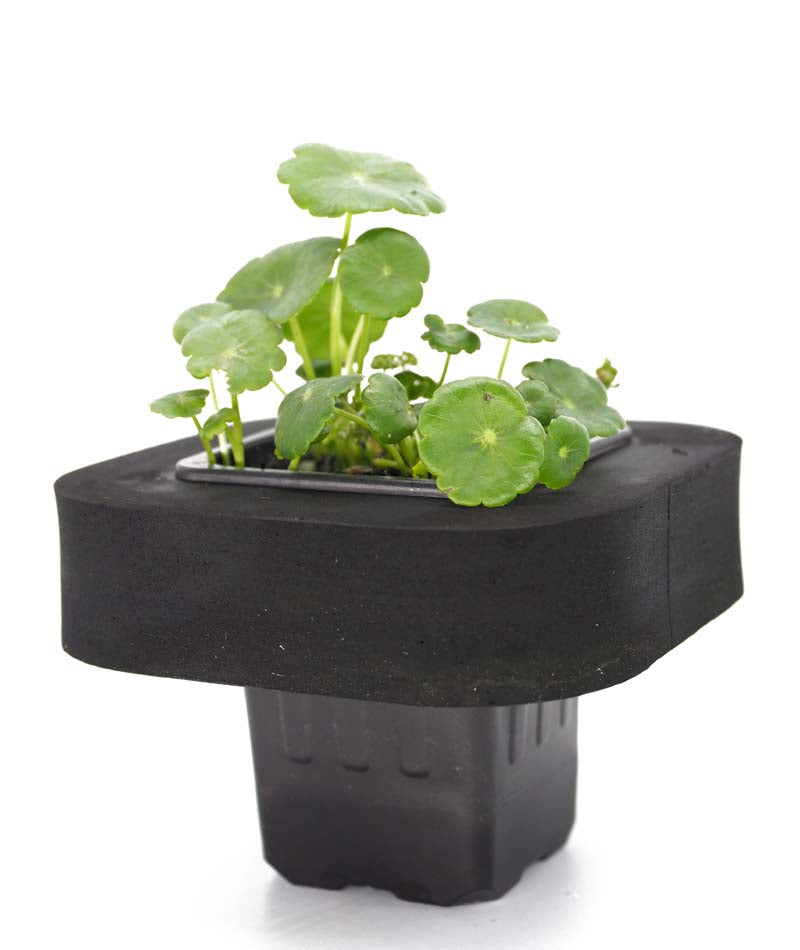
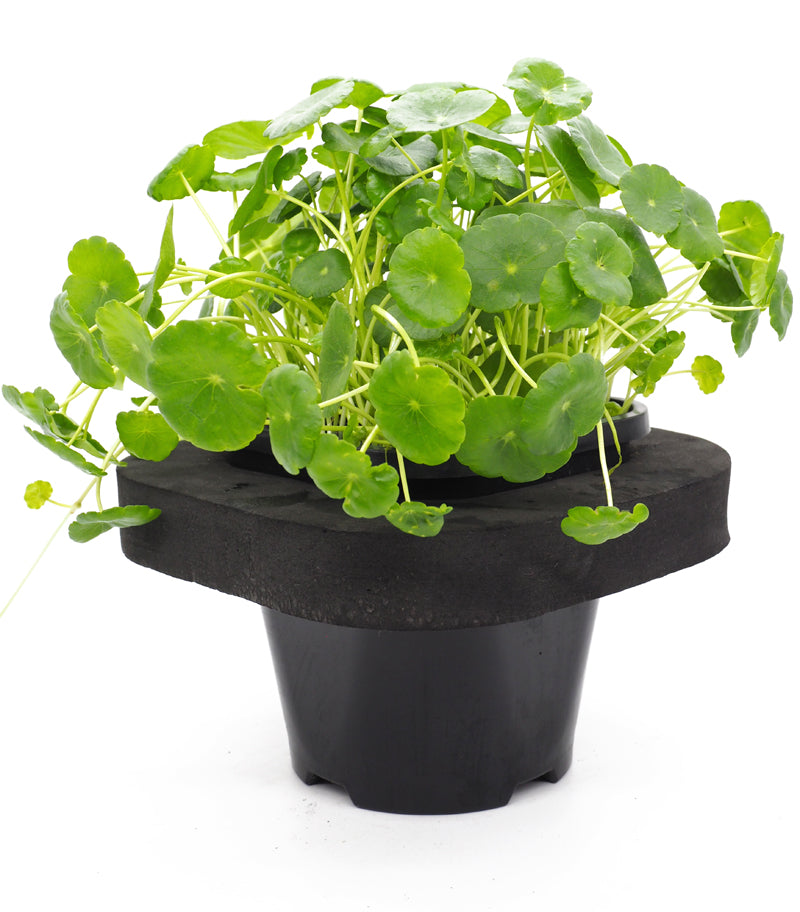
Shield Pennywort (Hydrocotyle sibthorpioides) is a versatile Australian pond plant that forms a dense, creeping mat of distinctive little umbrella-shaped leaves. Its shiny green foliage has a slightly ruffled edge, creating an attractive ground cover around the pond or across shallow areas of the water.
This perennial aquatic plant can grow submerged to approximately 10cm deep or spread through the damp and boggy margins of your pond. Its creeping growth habit makes it particularly useful for softening pond edges and creating natural habitat for frogs, fish and fry.
Shield Pennywort is relatively slow growing, so providing it with suitable aquatic fertiliser can help encourage healthy, vigorous growth.
Why you'll love Shield Pennywort
- Australian native pond plant
- Distinctive umbrella-shaped green leaves
- Forms attractive, dense creeping ground cover
- Can grow submerged or in damp, boggy soil
- Suitable for full sun to part shade
- Can be grown in water up to approximately 10cm deep
- Excellent cover for frogs, fish and fry
- Ideal for pond edges and bog gardens
- Produces small white flowers
- Continues spreading through runners
- Low-growing, reaching approximately 10cm high
- Perennial plant
- Suitable for both small and large water gardens
Where to grow Shield Pennywort
Shield Pennywort is particularly useful around the edge of the pond, where it can grow through damp or boggy soil and create a natural green carpet.
It can also be grown submerged to approximately 10cm deep, where its creeping foliage provides cover for frogs, fish and young fish (fry).
Shield Pennywort grows well in part shade, but can also tolerate full sun. Keeping the growing conditions consistently moist will help it establish and spread.
Shield Pennywort as a pond ground cover
One of the most appealing features of Shield Pennywort is its creeping growth habit. Rather than growing into a large upright plant, it sends out runners that gradually spread across the growing area.
Given suitable conditions, it can continue spreading to create dense ground cover around the pond. This makes it especially useful for softening hard pond edges and creating a more natural transition between the water and surrounding garden.
Shield Pennywort for frogs and fish
When grown submerged, Shield Pennywort can create a low layer of vegetation that provides cover and shelter for frogs, fish and fry.
For a wildlife-friendly water garden, combine it with taller marginal plants and floating plants to create several layers of habitat.
Feeding Shield Pennywort
Shield Pennywort can be relatively slow growing, particularly while it is establishing. Regular feeding with a suitable aquatic fertiliser can encourage healthy growth.
We recommend Pond Plantz Time Release Fertilizer. Follow the product directions when applying fertiliser to your pond plants.
Shield Pennywort Plant Information
Plant type: Perennial aquatic pond plant
Botanical name: Hydrocotyle sibthorpioides
Origin: Australia
Position: Full sun to part shade
Flowers: Small white flowers
Water depth: Up to approximately 10cm
Height: Approximately 10cm
Width: Spreading/continually expanding through runners
Foliage: Grows above the water line
Growth habit: Creeping ground cover
Oxygenating: No
Edible: No
Best for: Pond margins, boggy areas, shallow water, frog habitat and fish and fry cover
Learn more about Shield Pennywort
Want to know more about growing this unusual pond plant?
Read our guide: The Ultimate Guide to Growing Shield Pennywort Hydrocotyle sibthorpioides in Your Pond: Tips, Tricks, and Benefits.
Looking for more pond plants? Explore our range of Pond Plants Online and find plants for pond edges, bog gardens, shallow water, wildlife habitat and floating cover.
Blog

Growing Nardoo: A Guide to an Australian native Pond Plant
Blog

Discover the Latest Trends in Australian Pond Design and Native Plant Cultivation